Step-by-Step Guide to the Return-to-Duty Process for CDL Drivers
If you are a commercial driver who has failed or refused a drug or alcohol test, your career is not finished. You can return to work by completing the return-to-duty process. Many drivers feel lost after a violation, but this guide breaks the process into simple steps so you can understand what happens, what to expect, and how to move forward.
The return-to-duty process is a federal requirement for CDL drivers who violate drug or alcohol testing rules. It exists to make sure drivers are healthy, responsible, and compliant before they resume driving commercial vehicles.
This process is part of the broader DOT SAP Process, managed through the Substance Abuse Professional program. It ensures that drivers who complete the steps meet all FMCSA drug and alcohol regulations.
Knowing how this system works is more than a legal obligation it is a way to protect your livelihood. Understanding the return-to-duty process before a problem occurs helps you act fast, avoid confusion, and keep your career on track.
How to Start the Return-to-Duty Process?
The return-to-duty process begins immediately after a driver fails or refuses a required drug or alcohol test. Once this happens, the driver must be removed from all safety-sensitive duties such as driving, loading, or inspecting commercial vehicles.
The violation is recorded in the FMCSA Clearinghouse, a federal database that tracks compliance records for every CDL holder. You cannot return to work until this record shows that you have completed the full DOT SAP Process.
Your first task is to contact a Substance Abuse Professional (SAP). The SAP is trained to evaluate your case, create a recovery plan, and help you through each step. Drivers often find SAPs through employer referrals or online providers.
When you meet with a SAP, be honest about what happened. The Substance Abuse Professional program focuses on education and improvement, not punishment. Keeping clear communication with both your employer and SAP ensures faster progress and fewer mistakes.
What are RTD steps?
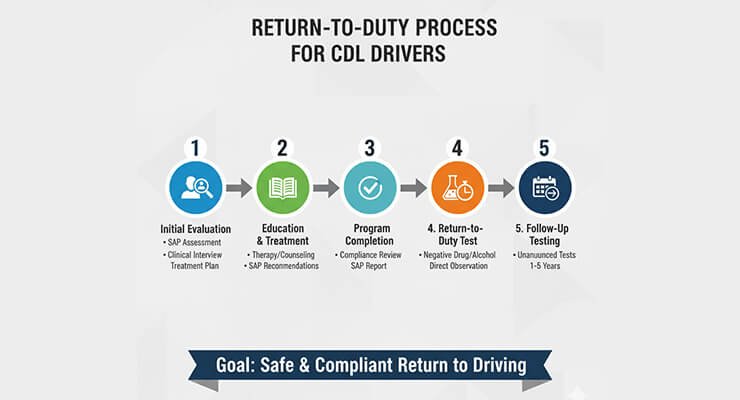
The return-to-duty process follows strict stages under federal law. Each stage verifies that the driver is ready to return to safe and compliant driving.
SAP Evaluation
The process starts with a personal meeting with a SAP. This professional reviews your test history, asks questions about your lifestyle, and determines the level of education or treatment required.
Education or Treatment Plan
Based on the evaluation, the SAP designs a plan tailored to your needs. It may include substance education classes, counseling sessions, or rehabilitation programs.
Completion Confirmation
Once you complete the plan, the SAP verifies your progress and schedules a follow-up evaluation to confirm readiness for testing.
Return-to-Duty Test
You then take a supervised drug or alcohol test. You must have a negative result before you can legally return to any safety-sensitive job.
Follow-Up Testing Schedule
After returning to work, the SAP sets a schedule for random follow-up testing that can last months or years.
According to the Federal Motor Carrier Safety Administration, every CDL driver who fails a drug or alcohol test must complete all of these stages before performing any safety-sensitive function again (FMCSA Return-to-Duty Guide).
How to complete RTD?
Completing the return-to-duty process takes time and commitment. Drivers who stay organized and follow instructions often return to work faster than those who delay communication.
After you finish your education or treatment program, you meet your SAP again for a follow-up evaluation. The SAP reviews documentation from your provider and decides whether you are ready for the next step.
If approved, your employer schedules the return-to-duty test. The test result must be negative, and it must follow FMCSA drug and alcohol regulations. Once the result is entered into the Clearinghouse, your employer can reinstate you for safety-sensitive duties.
Here are a few tips for completing the process successfully:
Keep digital and printed copies of all SAP paperwork.
Stay in contact with your employer or consortium representative.
Do not skip any scheduled tests. Missing even one can restart the process.
Ask your SAP questions whenever you feel uncertain clarity prevents costly errors.
Completing the DOT SAP Process demonstrates that you are responsible and compliant, giving you and your employer confidence on the road. Gain clarity by reading <a href="">Everything You Need to Know About the DOT SAP Program</a>.
What are the steps of the SAP program?
The Substance Abuse Professional program runs parallel to the return-to-duty process. It focuses on evaluating and supporting drivers through recovery and reintegration.
The four core steps include:
Initial Evaluation – The SAP meets with you to discuss your situation and outline next steps.
Education or Treatment – You complete the program designed to meet federal standards.
Follow-Up Evaluation – The SAP checks that you successfully finished the program and are fit for duty.
Testing and Monitoring – The SAP creates a written plan for future tests to maintain compliance.
The DOT SAP Process is not simply about passing tests. It helps drivers rebuild their reputation, understand safe behavior, and reduce the chance of future violations. Employers often prefer rehiring drivers who complete the program because they know those drivers take safety seriously.
Quick mention of getting quotes
Finding the right SAP provider can make a big difference. Costs, appointment times, and experience levels can vary. Before choosing, contact several providers and ask for quotes. This helps you find a program that fits your budget and schedule.
If you need a trusted starting point, visit DOT SAP Services. Their network of professionals guides drivers through every stage of the process with speed and care.
The human side of RTD
Behind every return-to-duty process is a personal story. Many drivers say that completing the program helped them improve not just their careers but also their health and relationships.
Some discover better coping skills for stress on the road. Others become mentors for new drivers, explaining how to stay compliant and avoid mistakes. Employers notice these improvements too they often report that returning drivers are more reliable and motivated than before.
The Substance Abuse Professional program offers more than paperwork. It gives people a structured second chance. Seeing it as an opportunity, not a punishment, changes how drivers handle challenges going forward.
Common questions about the process
To make this guide more practical, here are short answers to frequent driver questions:
How long does it take?
The timeline varies but usually ranges from a few weeks to several months, depending on treatment needs and test schedules.
Do I pay for it myself?
Most drivers are responsible for SAP and testing costs, though some employers may assist.
Can I work a non-driving job while in the program?
Yes. Many drivers work in non-safety-sensitive positions until they complete the process.
Adding these details gives a clearer picture of what real drivers experience and sets expectations before the first appointment.
Conclusion
Completing the return-to-duty process may feel overwhelming, but it is a manageable and proven way to get back behind the wheel legally and safely. It demonstrates responsibility, rebuilds trust with employers, and aligns you with FMCSA drug and alcohol regulations.
The DOT SAP Process and the Substance Abuse Professional program are not meant to end careers they exist to help drivers correct mistakes and return stronger.
If you are ready to start, visit DOT SAP Services for expert guidance, fast scheduling, and nationwide support.
For companies focused on workplace safety and compliance, trusted partners like Merrimack Cleaning & Maintenance Inc provide professional solutions that support both drivers and employers. Understanding the process early ensures you stay compliant, confident, and ready for the road ahead.